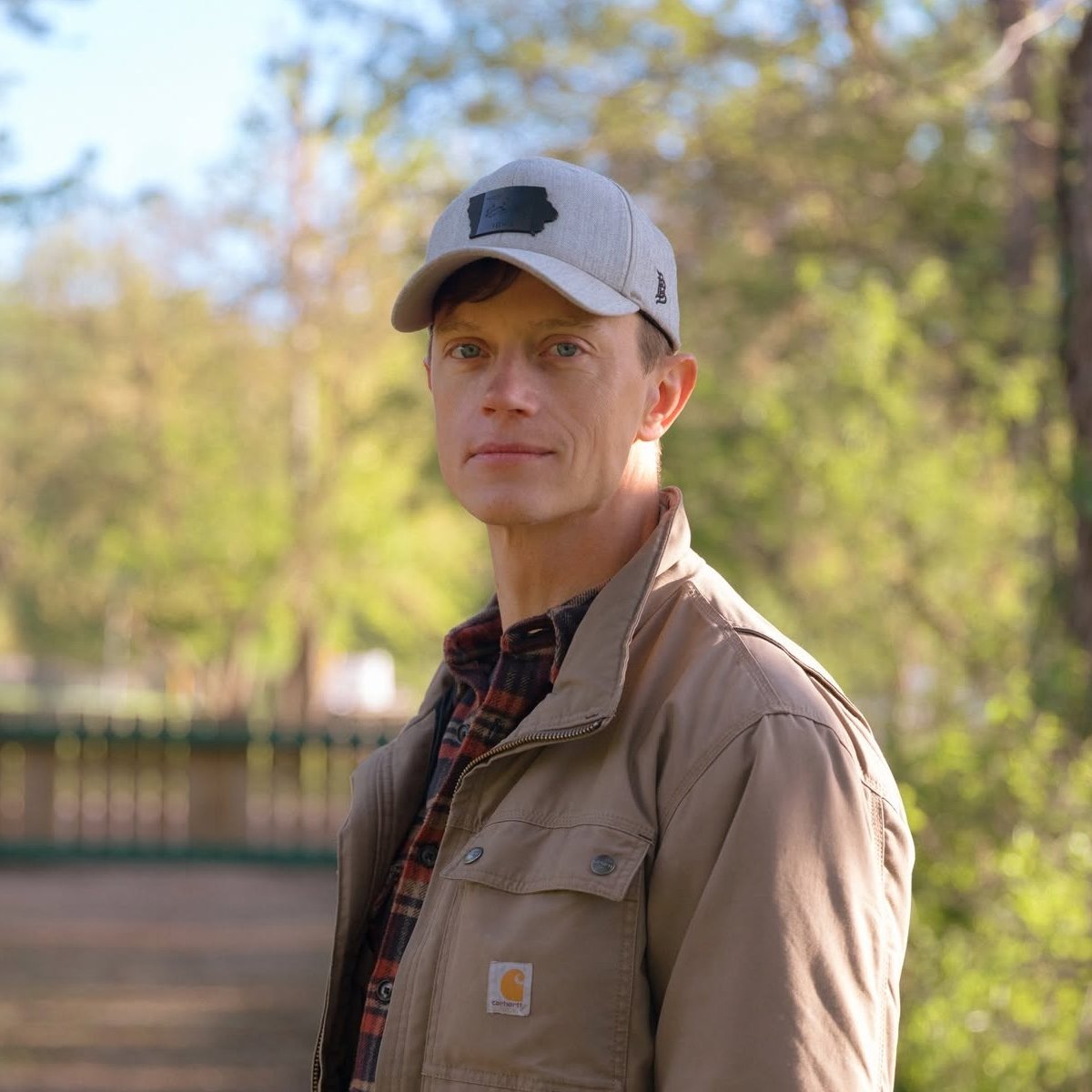
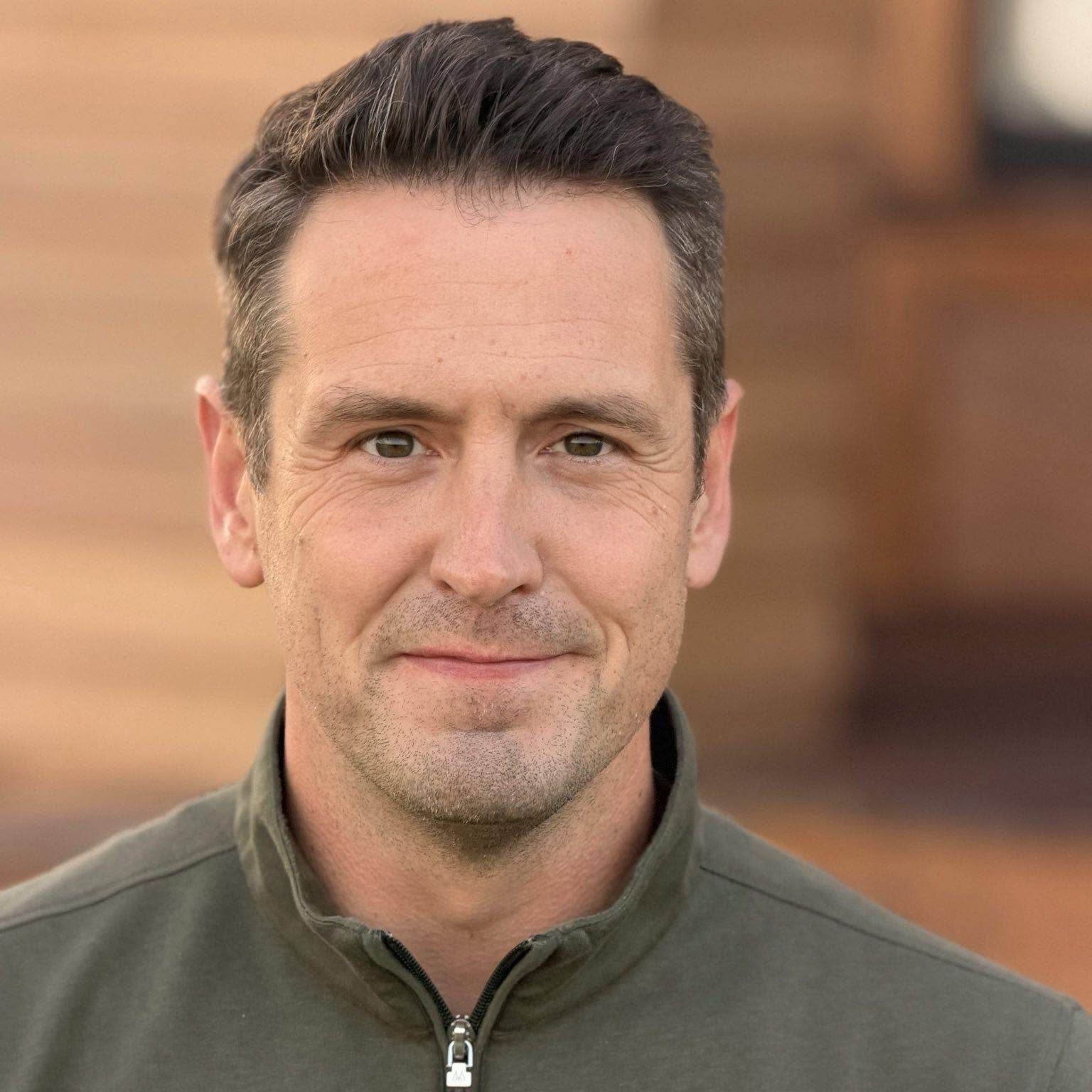
Rob Sand and Zach Lahn offered different approaches to schools, household costs and Iowa’s cancer problem at St. Ambrose University. They also returned repeatedly to two familiar campaign fights: Lahn’s ties to Kansas and Sand’s family wealth.
Sand leaned on his experience as state auditor and proposals to change how Iowa pays for and oversees public services. Lahn emphasized his business background, competition and changes to how schools and government operate.
There was agreement, too. Both supported more locally grown food in schools, expressed support for local control and said the proposed steel project should deliver results before receiving incentives.
Lahn accounted for about 58% of the candidates’ combined speaking time, compared with about 42% for Sand, based on the transcript’s speaker timestamps. That works out to roughly 28 minutes for Lahn and 21 minutes for Sand.
Estimated share of candidate speaking time
Rob Sand
Zach Lahn
Rob Sand: about 42%
Zach Lahn: about 58%
Candidate time only. Includes opening and closing statements; excludes moderators. Estimated from AI transcript timestamps.
Photos provided by Lahn for Governor · Photos provided by Rob Sand for Iowa
Candidate
Estimated speaking time
Share of candidate time
Words in transcript
Rob Sand
About 21 minutes
About 42%
4,298
Zach Lahn
About 28 minutes
About 58%
6,260
The format matters: Most answers had no fixed time limit. Opening and closing statements were allotted one minute each, and moderators could ask candidates to wrap up.
Estimated from an AI transcript. Overlapping speech and speaker-identification errors may affect the totals.
The words they returned to
The Oct. 6 debate, word for word
School, public, program and tax were among Sand’s most frequent substantive terms. Family, issue, tax and school were among Lahn’s.
Tap a word to compare how often each candidate used it.
Rob Sand
Democrat
Photos provided by Rob Sand for Iowa
Zach Lahn
Republican
Photos provided by Lahn for Governor
Word counts
Word sizes reflect mentions per 1,000 words. Common filler and candidate names are excluded; related forms are grouped. Counts are based on the AI transcript.
Sand: leading terms
Count
Per 1,000 words
Lahn: leading terms
Count
Per 1,000 words
School
21
4.89
Family
29
4.63
Public
17
3.96
Issue
28
4.47
Program
15
3.49
Tax
25
3.99
Tax
14
3.26
School
24
3.83
Office
10
2.33
Children
21
3.35
Counts include grouped forms, such as school/schools and family/families; children also includes kids. Speaker assignments include corrections made by comparing transcripts and reviewing the disputed passages.
Where their plans differed
Issue
Rob Sand
Zach Lahn
Public schools
Proposed a 5% funding increase in his first year, stronger private-school voucher oversight and restoring an income limit for vouchers.
Emphasized innovation zones, more flexibility for educators and additional help for students struggling in classrooms. Supported education savings accounts.
Household costs
Proposed limits on utility fees, a higher minimum wage and changes to prescription-drug costs.
Emphasized tax cuts, support for Iowa businesses and more funding for antitrust enforcement.
Water and cancer
Called for conservation, wetland restoration and radon testing, alongside attention to smoking, drinking and exercise.
Emphasized nitrate reduction, saturated buffers, water monitoring and incentives for farmers.
Property taxes
Supported local control and said Iowa should assess the effects of its recent property-tax changes before deciding what comes next.
Described eliminating property taxes on primary homes as a long-term goal, funded through savings and other revenue.
Lahn’s claim: Cancer vaccines do not exist and are not being tested; cancer therapies are something different.
Our check: Incorrect.
Cancer treatment vaccines are a recognized type of immunotherapy. The National Cancer Institute describes vaccines used to treat people who already have cancer and has documented clinical trials of mRNA cancer vaccines. A product can be both a vaccine and a therapy. That does not mean every experimental cancer vaccine is approved or proven effective.
The dispute: Sand said Lahn had supported banning all mRNA vaccines. Lahn said he meant COVID-19 shots and would support access to promising cancer treatments.
Our check: His earlier statements were broader than his explanation.
Our earlier review documented Lahn agreeing when asked about banning any mRNA vaccine, alongside other broad criticism of the technology. That supports concern about the scope of his position, but does not establish that he proposed banning every treatment involving mRNA. His debate statement supporting access to promising cancer therapies is a clarification readers should weigh alongside that earlier record.
Lahn’s claim: Sand’s opposition to tax-cut measures would leave a family paying $7,500 more each year.
Our check: Not supported.
Criticizing a tax cut does not establish a proposal to reverse it. Our earlier review found no evidence for the $7,500 claim. PolitiFact’s debate roundup also rejected the number, and Sand’s campaign has said he does not support reversing Iowa’s recent individual income-tax cuts. Sand has supported some narrower tax increases; that does not validate this figure.
The claims: Sand described Iowa’s public education system as being in the bottom half. Lahn described a fall from first to 27th.
Our check: The current ranking has support; the historical comparison needs context.
The 2026 KIDS COUNT education index ranks Iowa 27th. Other rankings use different measures and produce different results. Iowa once led the nation on particular tests, but our review did not establish a single overall No. 1 school-system ranking. A historical test ranking and a current composite index should not be presented as one continuous measure of decline.
Sand’s claim: His office found a 500% increase in illegal denials after Medicaid privatization, even after incorporating the administration’s feedback.
Our check: Supported by the report, with a narrower meaning than the wording suggests.
The auditor’s 2021 report analyzed member appeals over a period spanning 2013–2019. It reported an 891% increase in reversed denials under its analysis, or 588% when figures supplied by the Department of Human Services were favorably incorporated. Sand’s 500% figure is below that lower estimate. But this concerns the report’s analysis of appeal outcomes, not a count of every denied claim. State officials disputed whether the pre- and post-privatization appeals processes were comparable.
6. What does the record establish about Lahn and Kansas?
The dispute: Sand cited Lahn’s Kansas voting history and questioned whether he would be a full-time Iowa governor. Lahn said he lives in Iowa and travels because of his blended family.
Our check: His Kansas ties extend beyond family.
PolitiFact confirmed that Lahn voted in Kansas in 2018, 2020 and the 2022 primary. He also has a documented leadership role and financial interest in Wonder, the private school he helped establish in Wichita.
The school’s latest available IRS filing, covering the year ending in June 2025 and filed in May 2026, still listed Lahn as president and treasurer. It also reported owing Lahn and his wife about $4.5 million. The records reviewed do not document his departure from those roles.
Lahn’s explanation focused on his children, but his school responsibilities and financial ties are part of the record, too. The filing does not establish his current workload. He says his Kansas commitments would not interfere with serving as governor.
PolitiFact also examined Sand’s family donations and the exchange about fertilizer sold by a family business. Its roundup describes the family-funding claim as largely accurate and the fertilizer exchange as needing context. Those are separate questions from whether donations establish improper influence.
We compared Otter and YouTube transcripts, corrected obvious wording errors and reassigned identifiable interruptions. Speaking time is estimated from speaker timestamps and includes opening and closing statements. Moderators are excluded. Overlapping speech and remaining transcription errors may affect the totals. A brief final signoff is included in word counts but has no ending timestamp for timing.
For the word clouds, we removed common filler, candidate names and generic references to Iowa and the state. We grouped selected related forms. Each cloud shows 30 terms, ranked by frequency, with ties sorted alphabetically. Both clouds use the same font-size formula, based on the square root of occurrences per 1,000 candidate words. The downloadable data includes the complete exclusion list, groupings and word counts.
The checks cover selected factual claims, not every statement. They combine original-source review with links to earlier Iowa First Check work and clearly attributed outside reporting. Debate statements are paraphrased from the compared transcripts.